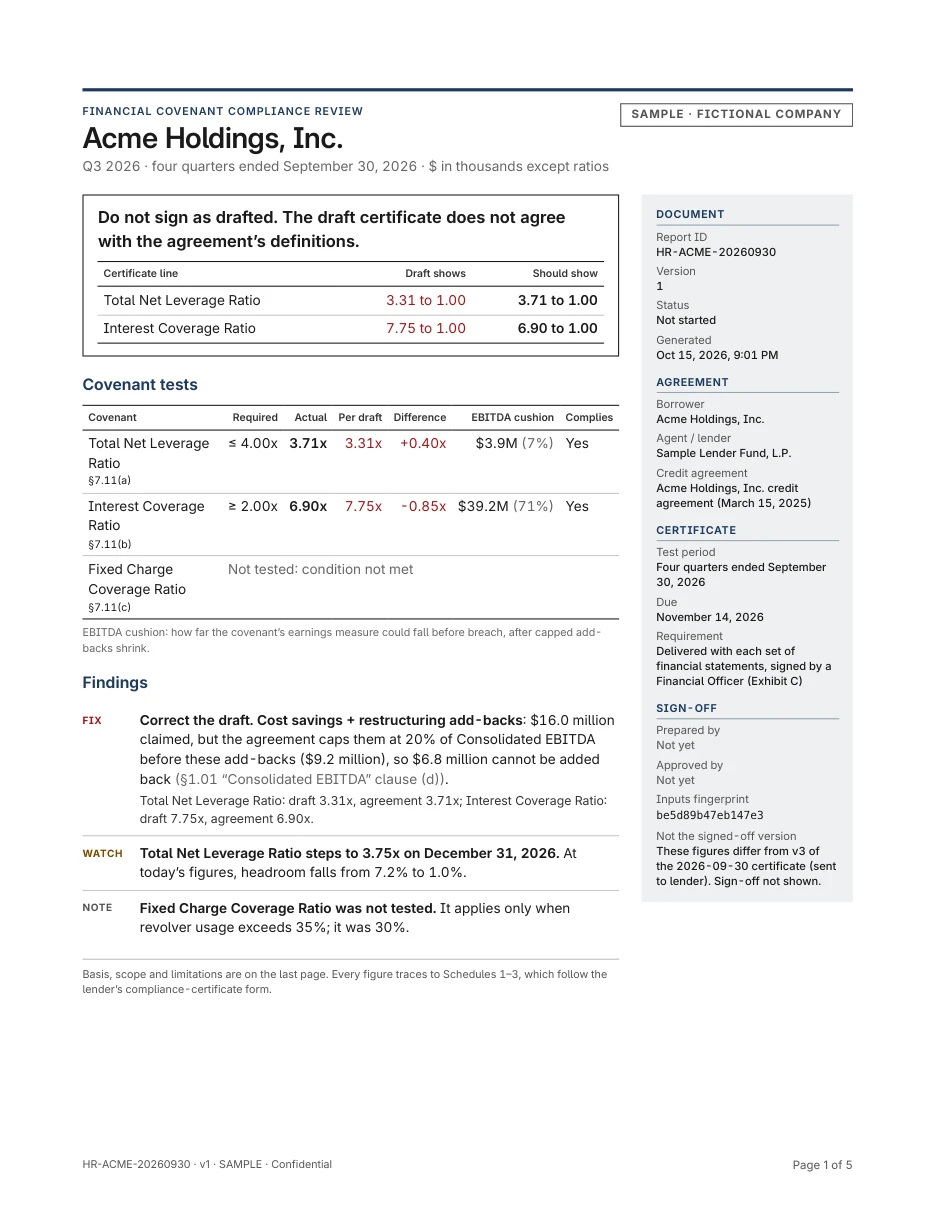
Click a figure, read the clause
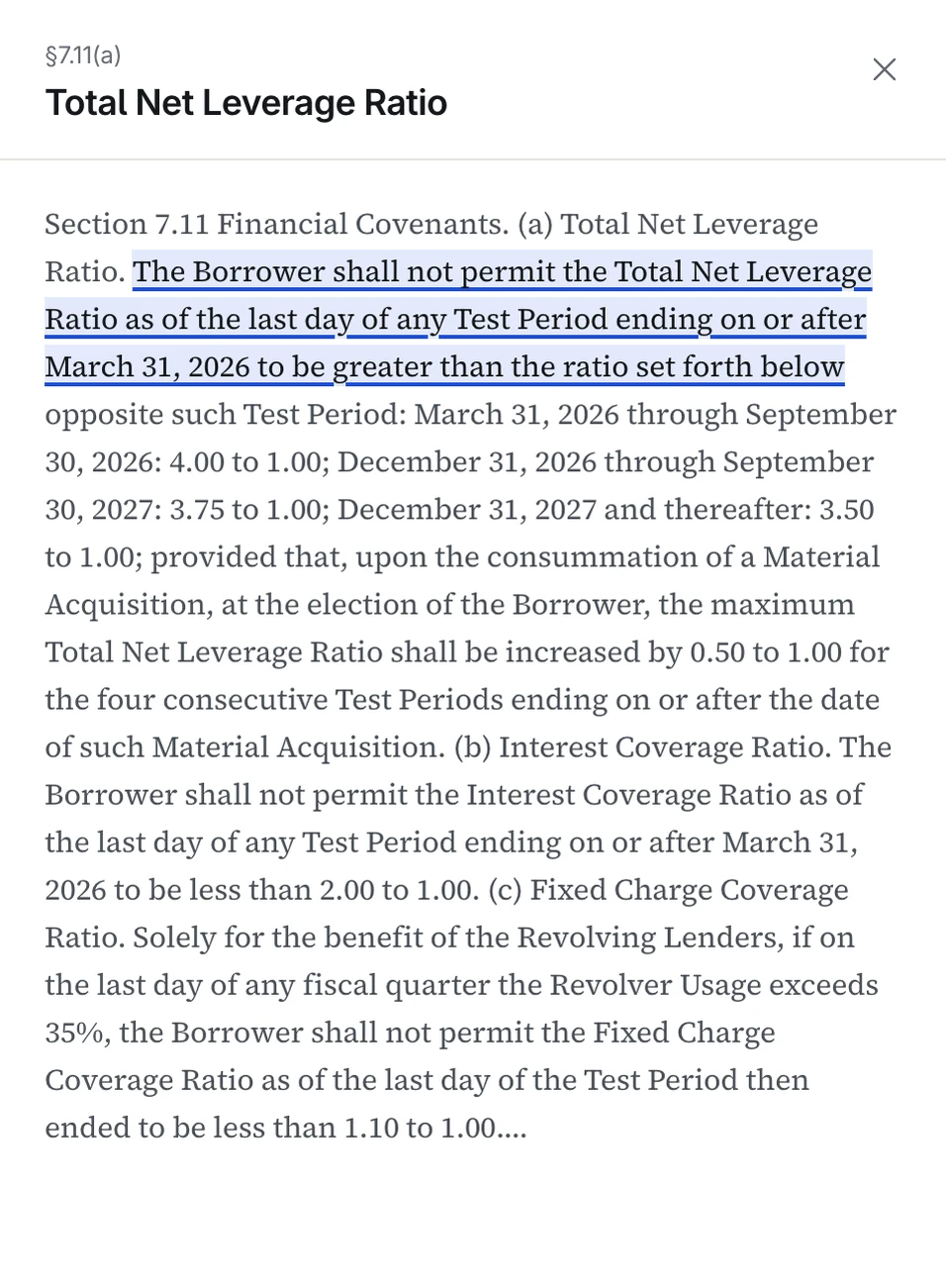
Every limit and definition links to the sentence it came from. Code checks that each quote appears in your agreement and flags any that don't.
For CFOs and controllers: Headroom recomputes each covenant from your credit agreement's own definitions and checks your draft compliance certificate before anyone signs.
Free. Under NDA. Nothing to install. A reply within a day.
Every credit agreement defines Consolidated EBITDA, debt and each ratio in its own words, with caps and carve-outs buried in the definitions. The certificate your officer signs has to follow them exactly. One add-back over its cap can turn a pass into a default.
…provided that the aggregate amount added back pursuant to this clause (d) shall not exceed 20% of Consolidated EBITDA for such Test Period (calculated before giving effect to such add-backs)…
Section 1.01, “Consolidated EBITDA,” clause (d)
From Headroom's sample review of a fictional borrower.
Who's behind this. Headroom is built by Tyler Morton, a computer science student at the University of Utah. It's early, with no paying customers yet, which is why the first review is free. You'll be talking to the person who wrote the code.
Validation
of financial-covenant ratio thresholds read correctly on 100 public-company credit agreements from SEC filings.
disagreements with a commercial loan database came from Headroom misreading the agreement.
thresholds left blank because the clause wasn't found. It left them for a person instead of guessing.
Method: 100 agreements not used during development, scored against LSEG DealScan, with every disagreement checked against the agreement text. 134 of 140 thresholds correct (95% confidence interval 91 to 98%; 9 ambiguous items excluded). The 90% pass bar was written down before the run. An earlier run on 100 other agreements scored 76.5% and missed it; this is the re-test after fixing how Headroom finds covenant sections. Public-company agreements only. Private credit documents may differ.
Every limit and definition links to the sentence it came from. Code checks that each quote appears in your agreement and flags any that don't.
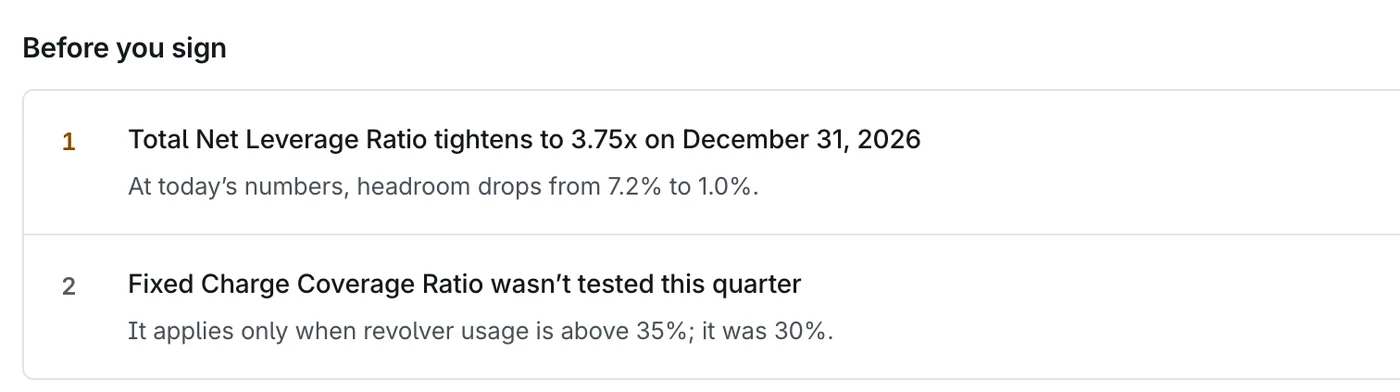
A short list of what's off, what's tight, and what changes next quarter.
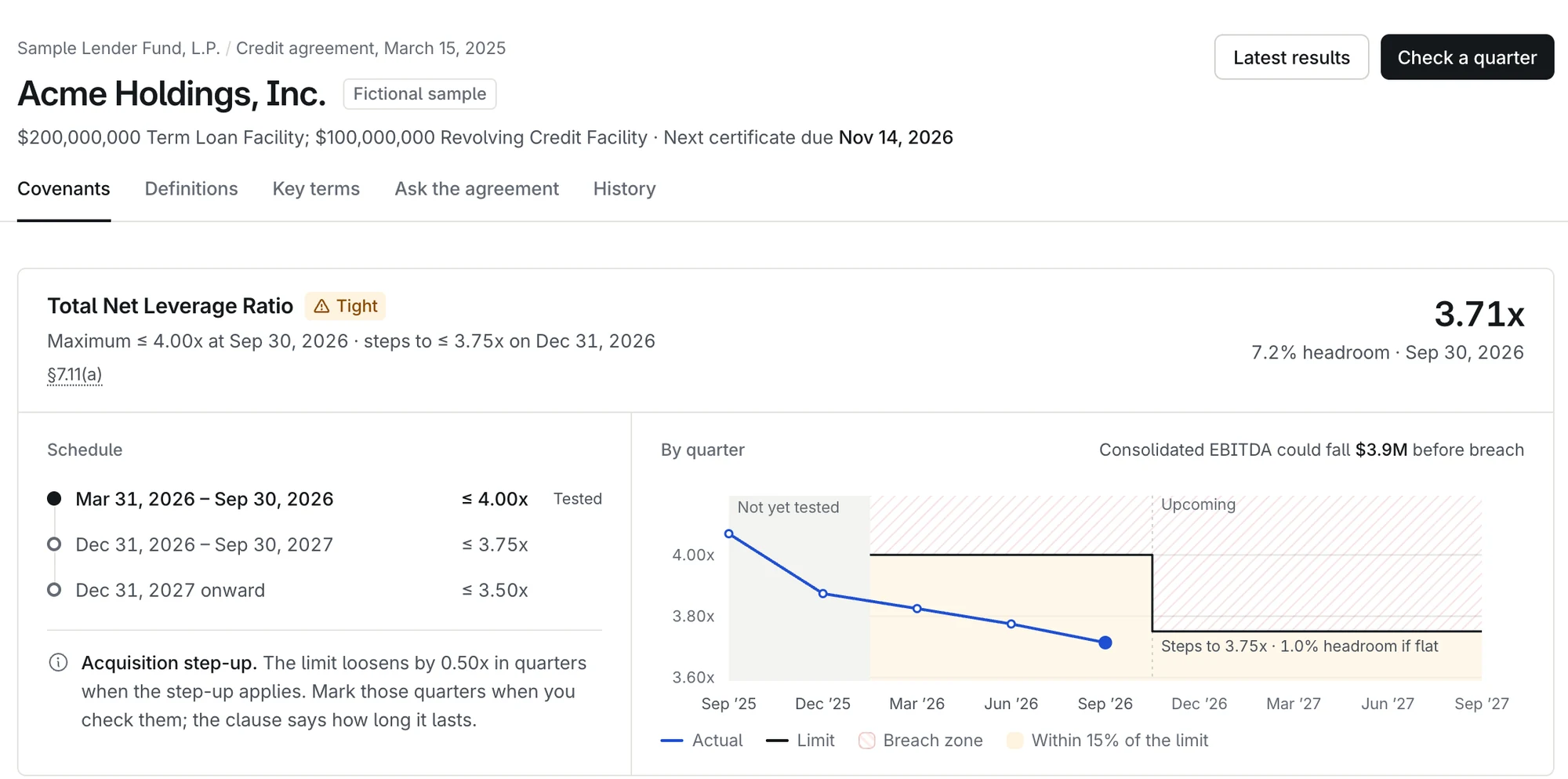
Limits, actuals, headroom and the next step-down for each lender.
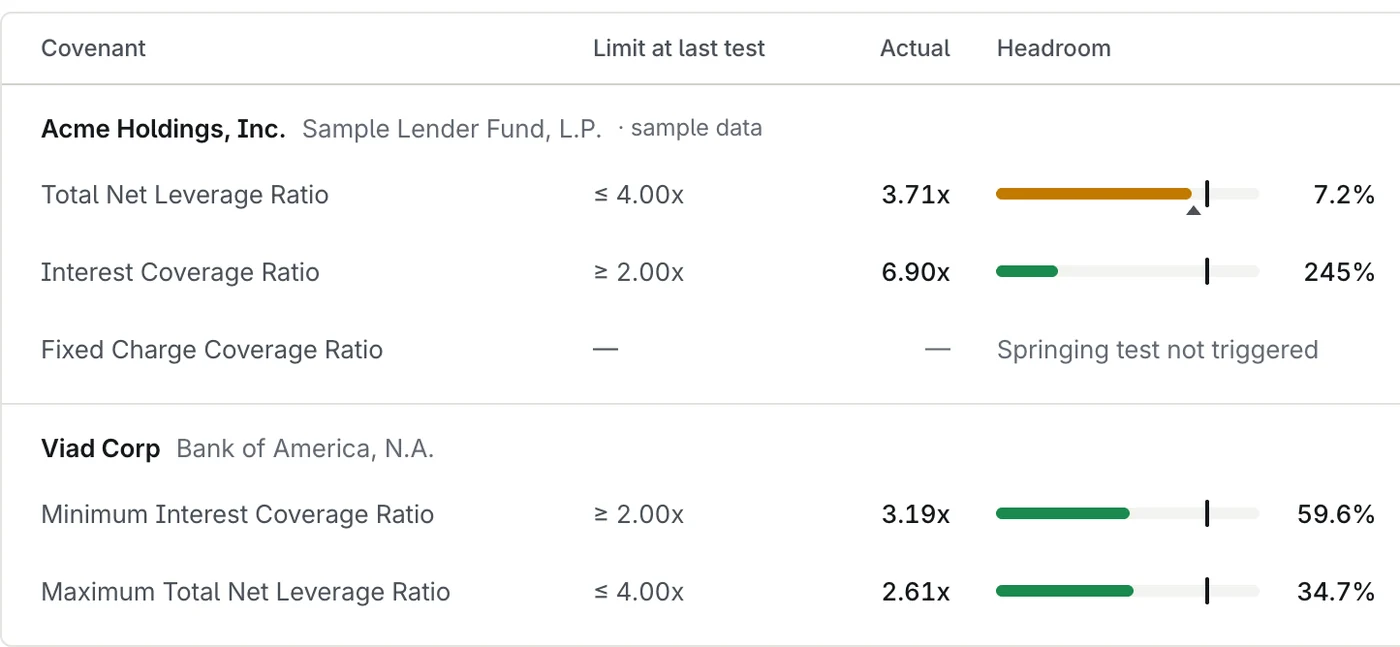
Handles step-downs, springing tests, acquisition step-ups, capped add-backs and netted-cash caps. Tested on public agreements so far.
The sample review's numbers, live. The draft certificate counts every dollar claimed. The agreement stops counting at 20% of EBITDA before add-backs.
Net debt held at $205.0M. Limit: 4.00x. Fictional sample data.
$6.8M of the claimed add-backs can't be counted.
No. You can start with a covenant map of any public credit agreement from SEC filings, yours or a peer's, with no documents and no NDA. For a full review, use a certificate you've already filed, and redact names if you like.
Only me. Documents are processed through Anthropic's commercial API, which doesn't train on API data by default, and deleted when the review is done or whenever you ask.
You confirm each definition before anything is calculated, and every number links to the clause it came from, so it can be checked in seconds. I also read every result myself before it goes to you.
Pricing will be per facility. It isn't set yet, and the first teams to try Headroom will help set it.
No. It's a check before you sign. It isn't legal advice or an audit, and management remains responsible for the certificate.
Pick what fits. A covenant map needs nothing but a public agreement. A full review checks a certificate you've already filed, under NDA. Either way you get a reply within a day.
First review free. After that, priced per facility.